Home Visit The Collection About The Poem Bibliography

The bibliography is an integral part of Concerning Unknown Women and appears within the physical installation at Park Abbey.

The texts gathered here offer different accounts of women’s interior, intellectual, spiritual and social lives. Read alongside the Abbey’s poems, they provide another lens through which the women in the archive can be encountered.

The bibliography also informs the video work. The professor has spent her life studying early modern literature and brings this history of reading to the portraits and records before her. Her encounter makes a central premise of the project visible: we read through what we have already read.
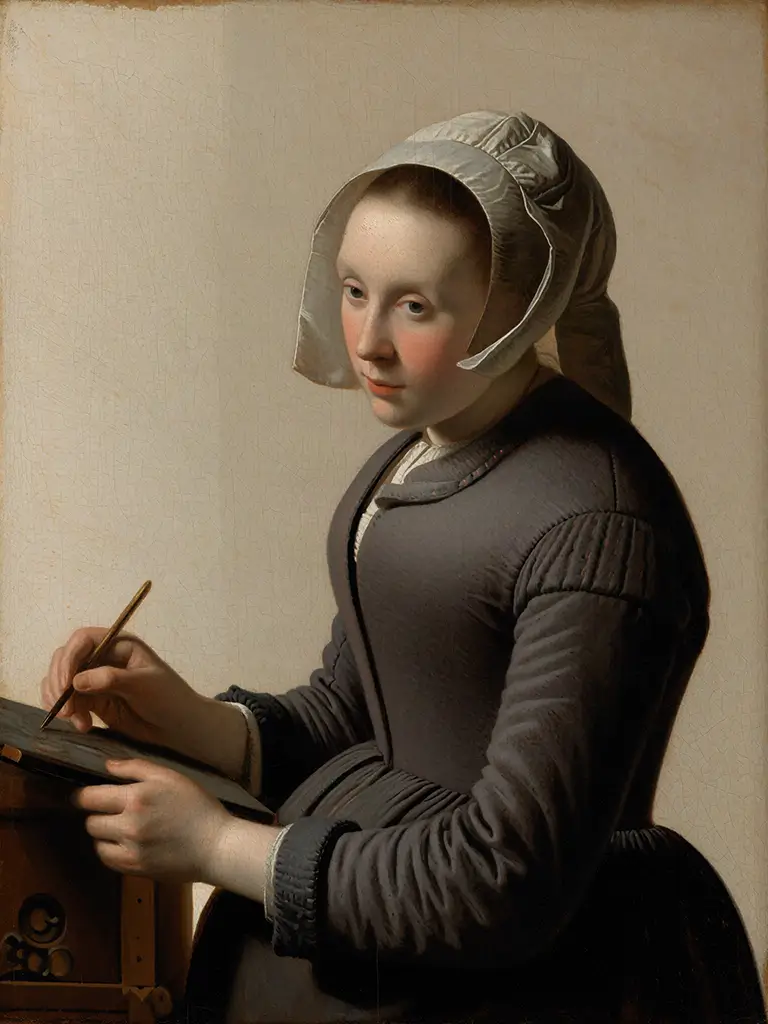
Joanna Maria Salien, 1782

I. Women Writing Themselves

These texts provide accounts of women's interior lives.

Hadewijch of Antwerp. Letters, Visions, and Poems. 13th century.

One of the most important female voices from the medieval Low Countries. Particularly relevant because of her geographic and cultural proximity to Leuven and the Beguine tradition.

Internet Archive: Hadewijch, Complete Works ↗

Hildegard of Bingen. Scivias. c. 1151.

A foundational work of female visionary authorship and intellectual authority.

Internet Archive: Scivias ↗

Julian of Norwich. Revelations of Divine Love. c. 1395.

Among the earliest surviving books written in English by a woman, with an emphasis on embodied experience and individual spiritual voice.

Project Gutenberg: Julian of Norwich ↗

Marguerite Porete. Le Mirouer des Simples Âmes (The Mirror of Simple Souls). c. 1300.

A major Beguine text centered on female spiritual authority and interior experience.

Internet Archive: The Mirror of Simple Souls ↗

II. Women Against Erasure

These works posit women as subjects worthy of historical record.

Giovanni Boccaccio. De mulieribus claris (Concerning Famous Women). c. 1361–62.

The first collection in Western literature devoted exclusively to biographies of women. Its 106 subjects provide the conceptual counterpoint for the title Concerning Unknown Women.

Internet Archive: De mulieribus claris ↗

Christine de Pizan. Le Livre de la Cité des Dames (The Book of the City of Ladies). 1405.

A foundational text that constructs an imaginary city populated by women whose accomplishments have been omitted or diminished by history.

Gallica: Christine de Pizan ↗

Christine de Pizan. Le Livre des Trois Vertus / Le Trésor de la Cité des Dames. 1405.

A companion to The City of Ladies that considers women’s social, intellectual and civic roles.

Project Gutenberg: Le Livre des Trois Vertus ↗

III. Women as Thinkers, Leaders and Agents

These texts offer accounts of women's social and civic agency.

Mary Astell. A Serious Proposal to the Ladies. 1694–97.

One of the earliest sustained arguments for women’s education in English. Astell proposes a women-centered intellectual community where women might pursue learning beyond the constraints of marriage and domestic expectation.

Internet Archive: A Serious Proposal to the Ladies ↗

Margaret Cavendish. The Description of a New World, Called The Blazing World. 1666.

A work of speculative fiction in which a woman becomes sovereign of an imagined world and exercises authority over science, philosophy and governance.

Project Gutenberg: The Blazing World ↗

François Poullain de la Barre. De l’égalité des deux sexes (The Equality of the Two Sexes). 1673.

Argues that intellectual capacity is independent of sex and that women possess the same rational abilities as men.

Internet Archive: Poullain de la Barre ↗

Olympe de Gouges. Declaration of the Rights of Woman and the Female Citizen. 1791.

An argument for women’s political and civic equality written during the French Revolution.

Wikisource: Declaration of the Rights of Woman and the Female Citizen ↗

Judith Sargent Murray. On the Equality of the Sexes. 1790.

An early American essay arguing for women’s intellectual equality and educational opportunity.

Project Gutenberg: Judith Sargent Murray ↗

Mary Wollstonecraft. A Vindication of the Rights of Woman. 1792.

Wollstonecraft argues that women’s apparent inferiority results not from nature but from unequal access to education and opportunity.

Project Gutenberg: A Vindication of the Rights of Woman ↗

Margaret Fuller. Woman in the Nineteenth Century. 1845.

Advocates for women’s intellectual, spiritual and social independence.

Project Gutenberg: Woman in the Nineteenth Century ↗