Home Visit The Collection About The Poem Bibliography

Concerning Unknown Women begins with poems preserved in the archives of Park Abbey commemorating women entering religious life. Across different names and dates, the same ideals of devotion, obedience and renunciation recur.

The title evokes Giovanni Boccaccio’s De mulieribus claris (Concerning Famous Women, c. 1361–62), a collection of 106 biographies of notable women. Caballero turns instead to women whose names were preserved but whose individual lives remain largely unknown.

The period predates photography, leaving text and painting as primary forms through which identity was recorded and imagined.

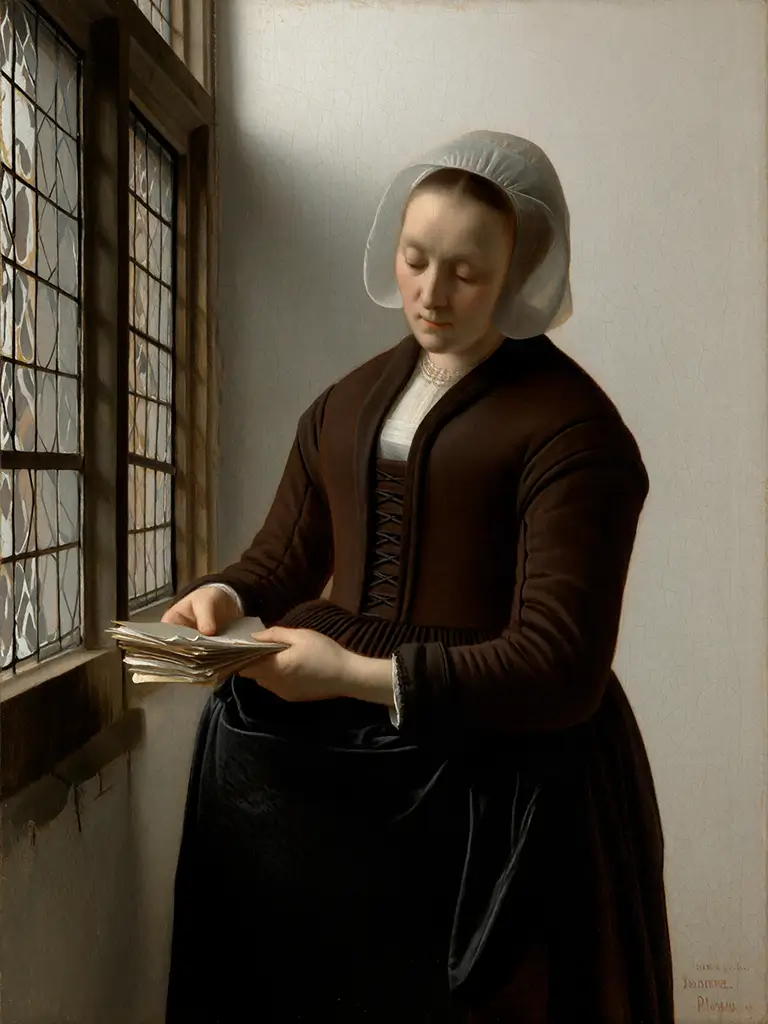
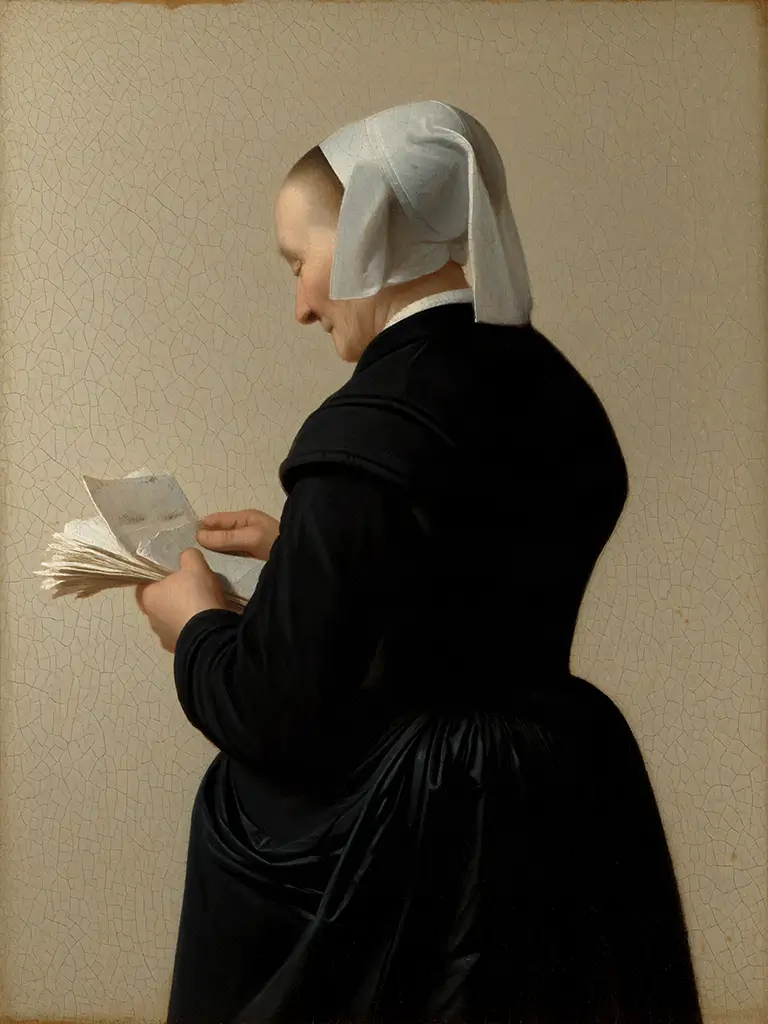
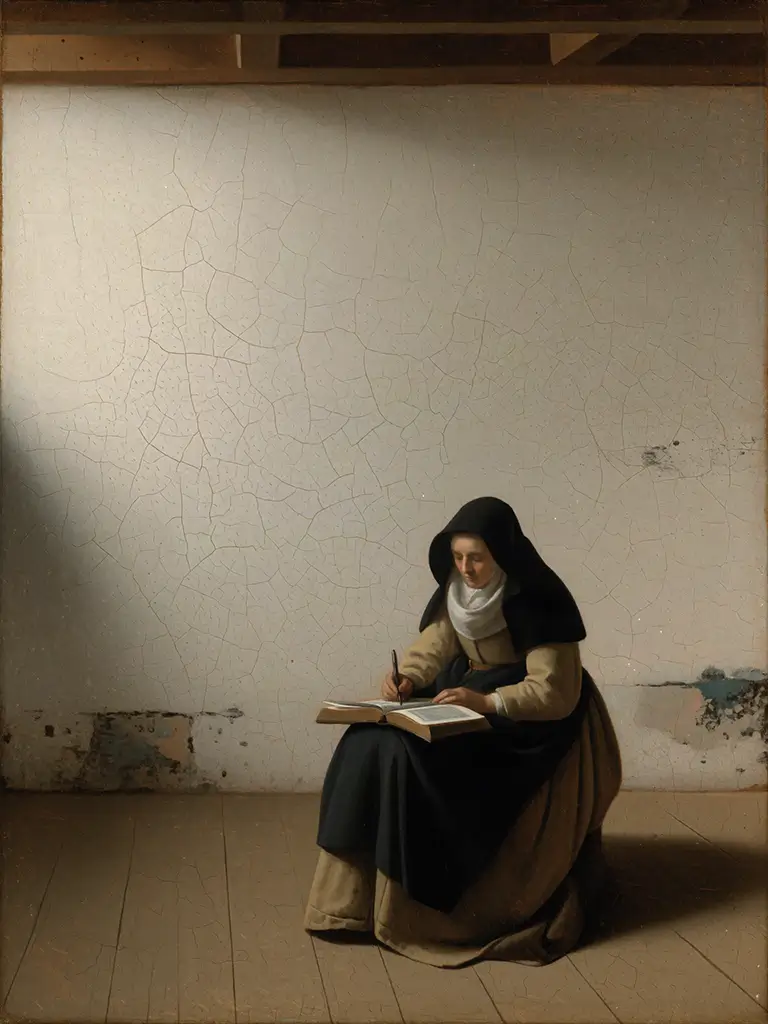
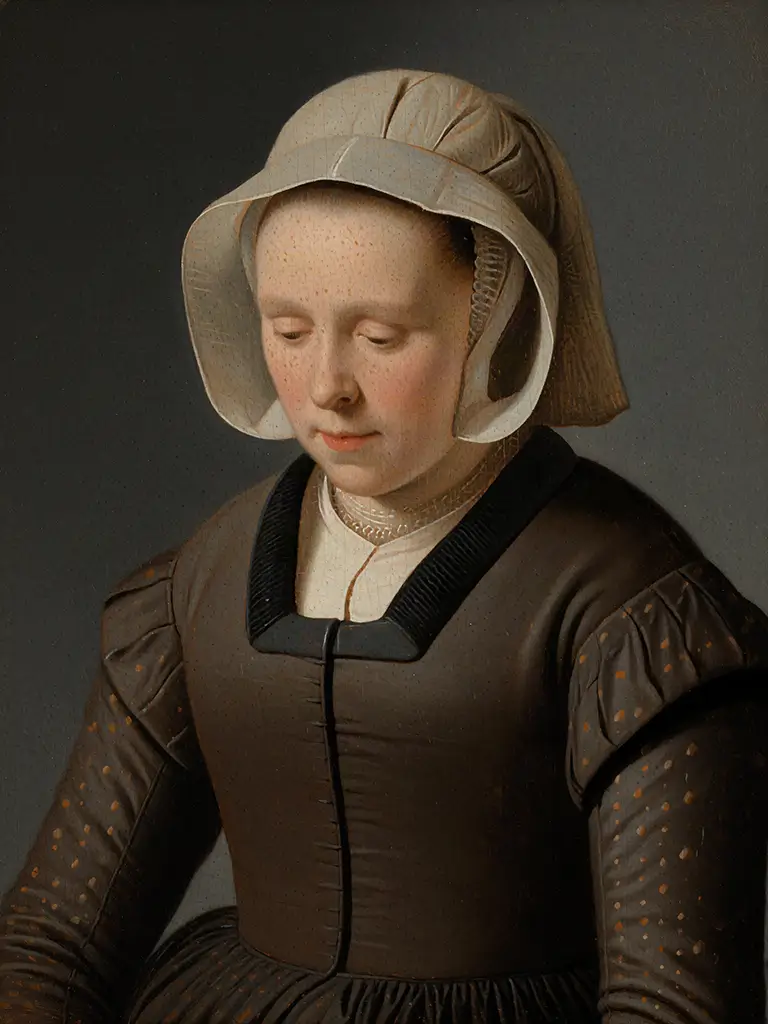
Caballero responds with imagined portraits rooted in Flemish painting but departing from its conventions. The women read, write, study, observe and make. Research into their religious communities and historical periods informs how they are dressed.

The portraits inhabit a speculative museum website that borrows the structures of a museum collection, placing these imagined women within an alternative canon.

A bibliography of writing by and about women accompanies the archive. In a video work, a professor of early modern literature encounters the website with these texts in mind. Caballero’s poem voices her internal monologue as her reading of these women turns toward questions about her own identity and what it means to know another person.

Press Release ↗

Elizabetha Rega, 1699 · Great Beguinage of Leuven.

Beatrix Machiels Gebortig Born Thienen, 1785.

About Ana María Caballero

Ana María Caballero ↗ is a Colombian-American poet and multidisciplinary artist whose work considers how poetry moves beyond the page through performance, installation, moving image and digital systems.

Her work is held in the collections of the Museo Reina Sofía, MACBA Barcelona, Fundación March, HEK Basel and the Francisco Carolinum Museum. She is the author of eight books and the recipient of the Lumen Prize, among other honors.

Methodology

Caballero begins with the names, dates, places and other traces preserved in the records. Developed with TITLES as a technological partner, the portraits use Flemish painting as a framework while departing from its conventions. The women are shown reading, writing, studying, observing and making.

Historical research into the convent, abbey, religious order or beguinage each woman entered informs how she is dressed. Habits, veils, wimples, fabrics and colors are specific wherever the historical record allows. The portraits do not claim historical likeness. Imagination enters where the record ends.

The speculative museum website is both an archive and a site of reading. Caballero choreographs and records a professor of early modern literature’s first encounter with it. The professor reads through the literature gathered in the bibliography, while Caballero’s poem voices her internal monologue. Clicking, scrolling, pausing and returning turn private reading into public performance.

Baronesse van Hamme de Grimberghe, Sister Augustina, 1781 · Herkenrode Abbey, Kuringen

Bibliography

The bibliography is an integral part of Concerning Unknown Women and appears within the physical installation at Park Abbey.

The texts gathered here offer different accounts of female interiority, intellect, spiritual authority, autonomy and historical presence. Read alongside the Abbey's poems, they reveal how differently women have been described, remembered and permitted to speak across centuries.

The bibliography also situates the project's video work within a history of reading. Its central figure, a professor of early modern literature, has devoted her life to interpreting texts. Her encounter with the speculative museum asks what reading becomes when the object before us is no longer a book, but an archive encountered through a screen.

Together, these works provide a literary context for the central question of Concerning Unknown Women: what can remain of a self when the language that survives was written by someone else?

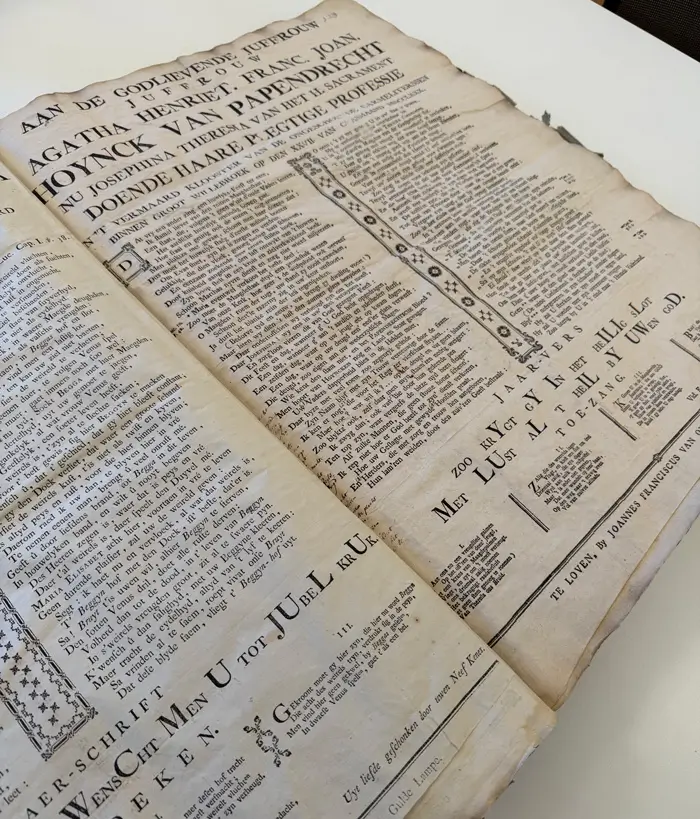
In the Archives: A preserved print detailing the religious vows of Agatha Hoynck van Papendrecht (Leuven).

I. Women Writing Themselves

Medieval texts by women: Hadewijch of Antwerp, Hildegard of Bingen, Julian of Norwich, Marguerite Porete. These are women who wrote from within religious life, shaping a language of interior experience and spiritual authority that the Abbey's admission poems, by contrast, systematically suppress.

II. Women Against Erasure

Works that respond to the erasure of women from historical record: Giovanni Boccaccio's De mulieribus claris (1361), Christine de Pizan's The Book of the City of Ladies (1405), and its companion text, Le Trésor de la Cité des Dames. These works construct alternative archives — catalogues of women whose accomplishments have been omitted or diminished by history.

III. Women as Thinkers, Leaders, and Agents

Texts that argue, often directly and urgently, for the intellectual and civic equality of women: Mary Astell, Margaret Cavendish, François Poullain de la Barre, Olympe de Gouges, Judith Sargent Murray, Mary Wollstonecraft, Margaret Fuller. Placed against the Abbey's admission records, these texts make audible a counter-tradition that was always present — if not always in the same room.
The Installation

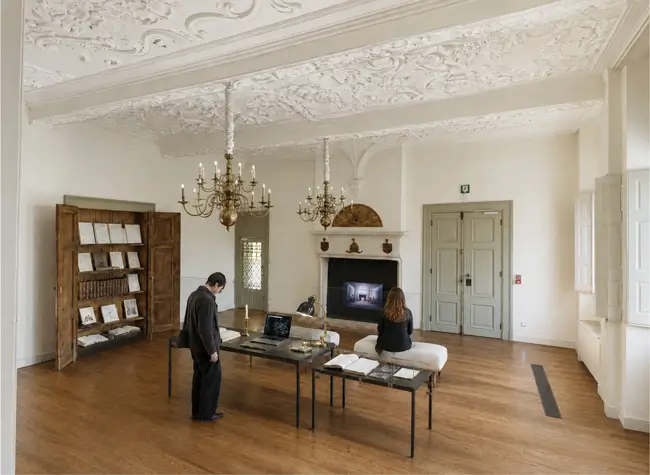
The installation takes the form of an active research environment. A large table brings together archival documents, books from the project’s bibliography, handwritten notes and research materials, while the speculative museum website is projected at architectural scale.

Historical documents sit alongside portraits informed by research into the women’s religious communities, dress and period.

A video work records a professor of early modern literature navigating the speculative museum for the first time. Caballero’s poem voices her internal monologue as she reads.

The video preserves not only what she reads, but how she reads: clicking, scrolling, pausing, choosing and returning.

Concerning Unknown Women is presented as part of Threading Landscapes at Park Abbey’s Museum PARCUM, Leuven.

Concerning Unknown Women, Installation render, For reference only, Museum PARCUM, 2026

On the Nature of This Archive

The portraits in this collection are imagined. Their names, dates and institutional records come from Park Abbey’s archives, but the images make no claim to historical likeness.

Historical research informs each portrait, including the community the woman entered and, where possible, how she might have dressed. Imagination begins where the record ends.

The website takes the form of a speculative museum, borrowing the structures museums use to classify and preserve images while making the uncertainty of its collection explicit.

An accompanying video follows a professor of early modern literature reading the archive through the texts gathered in the bibliography. Her encounter asks a simple question: How much can we know of another person through what has been preserved of them?

Joanna Maria Elisabetha van de Broek 1740